
Choosing the right digital marketing freelancer can make a big difference in how your business grows online. With so many freelancers offering different services, it is important to find someone who understands your goals and can deliver measurable results. 1. Understand Your Marketing Goals Before hiring a freelancer, identify what you want to achieve. Your goal could be improving SEO, increasing website traffic, generating leads, managing social media, or running paid advertising campaigns. 2. Check Their Experience Look at their previous work, portfolio, and experience with businesses similar to yours. A freelancer with relevant experience is more likely to understand your industry and target audience. 3. Review Their Services Digital marketing includes several areas such as SEO, social media marketing, Google Ads, Meta Ads, content marketing, and website optimization. Choose a freelancer whose services match your requirements. 4. Look for a Clear Strategy A good freelancer should clearly explain how they plan to achieve your goals. Avoid choosing someone based only on promises of instant results. Digital marketing usually requires consistent effort and optimization. 5. Compare Pricing and Value Freelancer rates vary based on services, experience, and scope of work. Rather than choosing the cheapest option, consider overall value, quality, and expected outcomes. 6. Communication Matters Clear and regular communication makes the working relationship easier. Choose someone responsive, transparent about their work, and willing to provide updates and reports. Conclusion The right digital marketing freelancer should understand your business goals, offer relevant expertise, communicate clearly, and focus on sustainable results. Take time to compare your options and choose someone who can become a reliable partner in your online growth. Digital Marketing Freelancer in Hyderabad
How to Choose the Right Digital Marketing Freelancer in Chennai?
Choosing the right digital marketing freelancer can make a big difference in how your business grows online. With so many freelancers offering different services, it is important to find someone who understands your goals and can deliver measurable results. 1. Understand Your Marketing Goals Before hiring a freelancer, identify what you want to achieve. Your goal could be improving SEO, increasing website traffic, generating leads, managing social media, or running paid advertising campaigns. 2. Check Their Experience Look at their previous work, portfolio, and experience with businesses similar to yours. A freelancer with relevant experience is more likely to understand your industry and target audience. 3. Review Their Services Digital marketing includes several areas such as SEO, social media marketing, Google Ads, Meta Ads, content marketing, and website optimization. Choose a freelancer whose services match your requirements. 4. Look for a Clear Strategy A good freelancer should clearly explain how they plan to achieve your goals. Avoid choosing someone based only on promises of instant results. Digital marketing usually requires consistent effort and optimization. 5. Compare Pricing and Value Freelancer rates vary based on services, experience, and scope of work. Rather than choosing the cheapest option, consider overall value, quality, and expected outcomes. 6. Communication Matters Clear and regular communication makes the working relationship easier. Choose someone responsive, transparent about their work, and willing to provide updates and reports. Conclusion The right digital marketing freelancer should understand your business goals, offer relevant expertise, communicate clearly, and focus on sustainable results. Take time to compare your options and choose someone who can become a reliable partner in your online growth. Digital Marketing Freelancer in Chennai
How to Choose the Right Digital Marketing Freelancer in Delhi?
Choosing the right digital marketing freelancer can make a big difference in how your business grows online. With so many freelancers offering different services, it is important to find someone who understands your goals and can deliver measurable results. 1. Understand Your Marketing Goals Before hiring a freelancer, identify what you want to achieve. Your goal could be improving SEO, increasing website traffic, generating leads, managing social media, or running paid advertising campaigns. 2. Check Their Experience Look at their previous work, portfolio, and experience with businesses similar to yours. A freelancer with relevant experience is more likely to understand your industry and target audience. 3. Review Their Services Digital marketing includes several areas such as SEO, social media marketing, Google Ads, Meta Ads, content marketing, and website optimization. Choose a freelancer whose services match your requirements. 4. Look for a Clear Strategy A good freelancer should clearly explain how they plan to achieve your goals. Avoid choosing someone based only on promises of instant results. Digital marketing usually requires consistent effort and optimization. 5. Compare Pricing and Value Freelancer rates vary based on services, experience, and scope of work. Rather than choosing the cheapest option, consider overall value, quality, and expected outcomes. 6. Communication Matters Clear and regular communication makes the working relationship easier. Choose someone responsive, transparent about their work, and willing to provide updates and reports. Conclusion The right digital marketing freelancer should understand your business goals, offer relevant expertise, communicate clearly, and focus on sustainable results. Take time to compare your options and choose someone who can become a reliable partner in your online growth. Digital Marketing Freelancer in Delhi
How to Choose the Right Digital Marketing Freelancer in Bangalore?
Choosing the right digital marketing freelancer can make a big difference in how your business grows online. With so many freelancers offering different services, it is important to find someone who understands your goals and can deliver measurable results. 1. Understand Your Marketing Goals Before hiring a freelancer, identify what you want to achieve. Your goal could be improving SEO, increasing website traffic, generating leads, managing social media, or running paid advertising campaigns. 2. Check Their Experience Look at their previous work, portfolio, and experience with businesses similar to yours. A freelancer with relevant experience is more likely to understand your industry and target audience. 3. Review Their Services Digital marketing includes several areas such as SEO, social media marketing, Google Ads, Meta Ads, content marketing, and website optimization. Choose a freelancer whose services match your requirements. 4. Look for a Clear Strategy A good freelancer should clearly explain how they plan to achieve your goals. Avoid choosing someone based only on promises of instant results. Digital marketing usually requires consistent effort and optimization. 5. Compare Pricing and Value Freelancer rates vary based on services, experience, and scope of work. Rather than choosing the cheapest option, consider overall value, quality, and expected outcomes. 6. Communication Matters Clear and regular communication makes the working relationship easier. Choose someone responsive, transparent about their work, and willing to provide updates and reports. Conclusion The right digital marketing freelancer should understand your business goals, offer relevant expertise, communicate clearly, and focus on sustainable results. Take time to compare your options and choose someone who can become a reliable partner in your online growth. Digital Marketing Freelancer in Bangalore
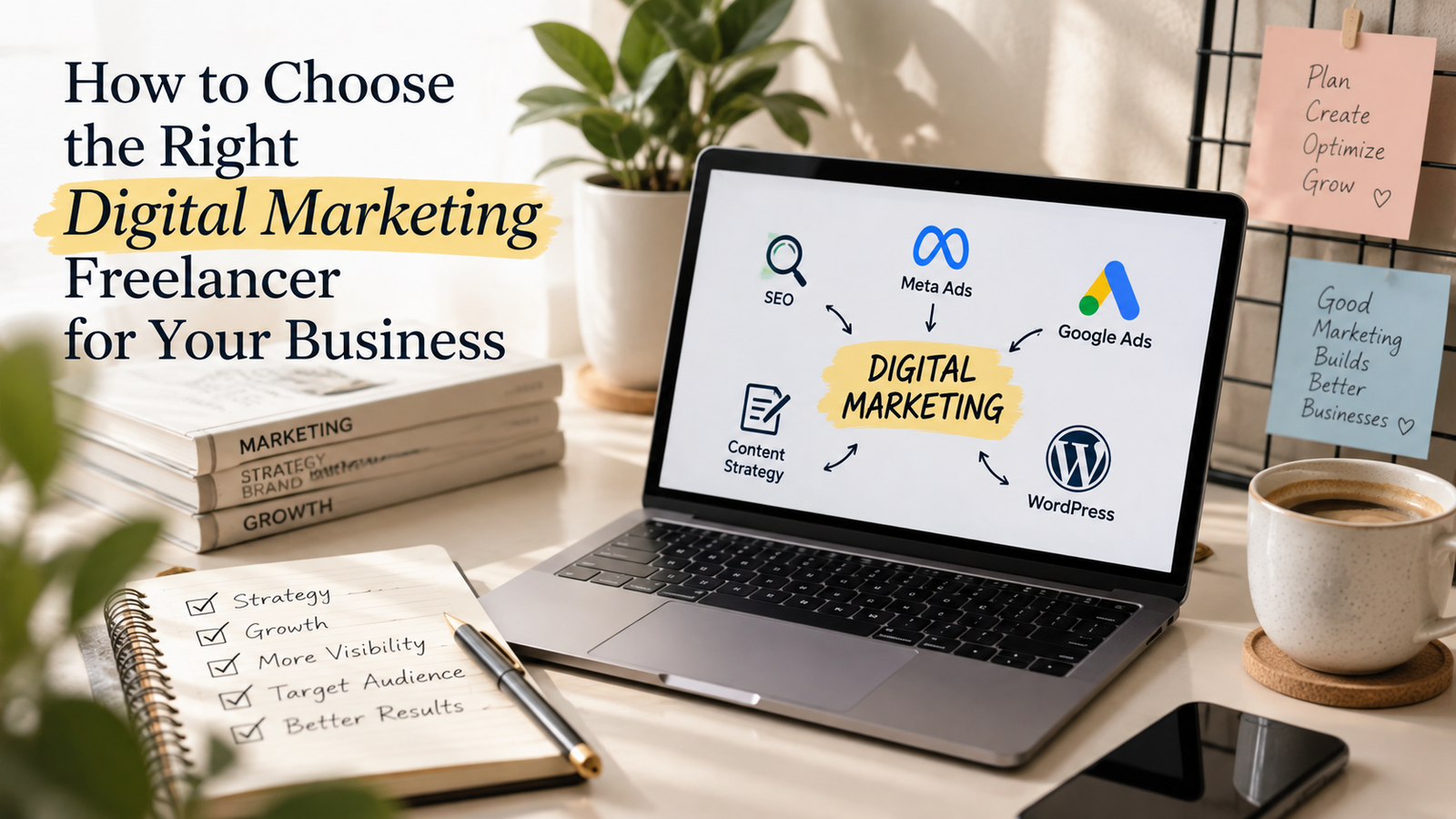
How to Choose the Right Digital Marketing Freelancer for Your Business?
In today’s digital-first world, having a strong online presence is essential for businesses of all sizes. From improving search engine rankings to running paid advertising campaigns, digital marketing can help a business attract the right audience and generate consistent growth. However, hiring the right person to manage your digital marketing can be challenging. Should you work with an agency, hire an in-house professional, or choose a digital marketing freelancer? For startups and small to medium-sized businesses, a freelancer can be a flexible and cost-effective option. But not every freelancer will be the right fit for your business. If you want to understand the role of a freelancer in more detail before making a decision, read this complete guide to digital marketing freelancing to learn more about the field, its responsibilities, and how freelance digital marketing works. Here are some important factors to consider when choosing the right digital marketing freelancer. 1. Understand What Your Business Needs Before searching for a freelancer, identify what you actually need help with. Digital marketing covers several areas, including: Search Engine Optimization (SEO) Social media marketing Meta Ads Google Ads Content marketing Website development Email marketing Analytics and reporting Digital marketing strategy For example, if your main goal is to increase organic traffic, you may need an SEO-focused freelancer. If you want to generate leads quickly, someone experienced in Google Ads or Meta Ads may be more suitable. Having clear goals will make it easier to find a freelancer with the right expertise. 2. Check Their Skills and Services Once you know what you need, look at the freelancer’s services carefully. A good digital marketing freelancer should clearly explain what they can help you with rather than simply listing every possible digital marketing service. Check whether they have experience with the specific services you require, such as SEO, Meta Ads, Google Ads, WordPress, or content strategy. You should also ask what tools they use for their work. SEO professionals, for example, may use tools such as SEMrush, Ahrefs, Google Search Console, Google Analytics, or other SEO platforms. You should also check whether the freelancer uses the right tools to manage and measure marketing activities. Tools such as SEMrush, Ahrefs, Google Analytics, and Google Search Console can help with keyword research, SEO analysis, and performance tracking. You can explore these digital marketing freelancer tools to understand how they support different marketing tasks. 3. Look at Their Portfolio and Previous Work A portfolio can tell you much more than a list of skills. Before hiring a freelancer, review their previous projects and look for examples related to your industry or business goals. Pay attention to: Website improvements Search rankings Traffic growth Lead generation Social media performance Ad campaign results Content quality You don’t necessarily need someone who has worked in exactly the same industry. What matters is whether they understand marketing fundamentals and can adapt their strategy to your business. 4. Ask About Their Approach A well-planned digital marketing strategy helps businesses identify their target audience, choose the right marketing channels, set measurable goals, and allocate their budget effectively. Before hiring a freelancer, make sure they can explain how their strategy will support your specific business objectives. Every business is different, so a freelancer shouldn’t use exactly the same strategy for every client. Ask them how they would approach your business. A good freelancer should first understand your: Target audience Products or services Competitors Current online presence Business objectives Budget Customer journey They should then explain how their marketing activities can support those objectives. Be cautious if someone promises instant results without first understanding your business. 5. Review Their Communication Style Good communication is one of the most important factors when working with a freelancer. Before hiring someone, discuss: How often you will receive updates Which communication channels they use How quickly they usually respond How meetings will be handled How reports will be shared You don’t need someone who is available 24/7. You need someone who communicates clearly, meets deadlines, and keeps you informed about important developments. 6. Understand Their Pricing Freelancers can charge in different ways. Some may charge hourly, while others offer monthly packages or project-based pricing. Don’t automatically choose the cheapest option. Instead, compare the price with the services included, experience, expected deliverables, and level of support. Ask for a clear breakdown of what you are paying for. For example, an SEO package may include keyword research, on-page optimization, technical SEO recommendations, content planning, and monthly reporting. Understanding the scope beforehand can prevent misunderstandings later. 7. Check Reviews and Testimonials Client feedback can provide useful insights into a freelancer’s professionalism and reliability. Look for testimonials on their website, LinkedIn profile, Google Business Profile, or other professional platforms. Pay attention to comments about: Communication Quality of work Meeting deadlines Transparency Problem-solving Results If possible, ask the freelancer whether they can share relevant case studies or examples of previous projects. 8. Ask About Reporting and Performance Tracking Digital marketing should not be based entirely on assumptions. A professional freelancer should be able to explain how they will measure performance. Depending on your goals, important metrics could include: Website traffic Keyword rankings Leads Conversion rate Cost per lead Return on ad spend (ROAS) Engagement Click-through rate Regular reporting helps you understand what is working and where improvements are needed. 9. Start With a Small Project If you’re unsure about hiring someone for a long-term contract, consider starting with a smaller project. For example, you could begin with: An SEO audit Website optimization A short-term advertising campaign Content strategy Social media audit Keyword research This gives you an opportunity to evaluate their communication, quality of work, strategic thinking, and ability to meet deadlines before committing to a longer engagement. 10. Choose Someone Who Understands Your Business Goals Ultimately, the right freelancer isn’t necessarily the person with the longest list of services. The right digital marketing freelancer is someone who understands your business, your customers, and what you are trying to achieve. They should be able to

Digital Marketing Freelancer Tools: Essential Tools for Managing Marketing Campaigns
Digital Marketing Freelancer Tools: Essential Tools for Managing Marketing Campaigns A digital marketing freelancer often manages multiple responsibilities at the same time—from keyword research and SEO audits to content creation, social media management, paid advertising, website optimisation, analytics, and client reporting. Having the right tools can make these activities more organised, measurable, and efficient. The right digital marketing freelancer tools can make everyday marketing tasks easier to manage. However, using more tools does not automatically create better marketing. The goal is to build a practical digital marketing toolkit where every platform has a clear purpose and contributes to the overall strategy. A freelancer may use one tool to discover keywords, another to analyse website performance, another to create content, and another to measure campaign results. The tools work together to support research, execution, measurement, and optimisation. Choosing suitable digital marketing freelancer tools can also improve the overall workflow. This guide explains the essential digital marketing freelancer tools, what they are used for, how they fit into a campaign workflow, and how a freelancer can choose the right tools for different client requirements. What are Digital Marketing Freelancer Tools? Digital marketing freelancer tools are software platforms that help independent marketers plan, execute, manage, analyze, and report on digital marketing activities. The best digital marketing freelancer tools depend on the freelancer’s services and client requirements. These tools can cover areas such as: SEO Keyword research Website auditing Analytics Paid advertising Social media management Content creation Website management Project management Client reporting These digital marketing freelancer tools can support different stages of a marketing campaign. For example, SEO platforms can help freelancers identify keywords, analyze competitors, monitor rankings, and audit websites. Semrush’s SEO tools include keyword research, site auditing, backlink analysis, and position tracking, while Ahrefs provides tools such as Site Explorer, Site Audit, Keywords Explorer, and Web Analytics. The important point is that tools should support marketing decisions rather than replace them. A freelancer still needs to understand the client’s business, target audience, goals, competition, budget, and customer journey before deciding which tools and channels to use. Why does a Digital Marketing Freelancer need the right tools? Freelancers frequently work across several areas of digital marketing. Without an organised toolset, it can become difficult to manage information and track results. Using the right digital marketing freelancer tools can make this process more organised. The right tools can help a freelancer: 1. Save time Automated reports, scheduled social posts, website audits, and keyword databases can reduce repetitive manual work. 2. Make data-driven decisions Instead of relying only on assumptions, freelancers can use website, search, advertising, and social media data to understand what is happening. 3. Manage multiple clients A structured toolkit can make it easier to separate campaigns, reports, content calendars, keywords, and project tasks. Reliable digital marketing freelancer tools can help freelancers manage work across multiple clients. 4. Monitor performance Marketing activities need to be measured against specific objectives. Analytics and reporting platforms help freelancers identify changes in traffic, engagement, leads, conversions, and other relevant metrics. 5. Improve campaigns continuously Digital marketing is not a one-time activity. A freelancer can analyze results, identify problems, make adjustments, and measure the results again. This is where digital marketing freelancer tools can help with ongoing campaign optimization. This creates a continuous process: Research → Plan → Execute → Measure → Analyze → Optimize That process connects directly with the broader strategy discussed in How a Digital Marketing Freelancer Creates a Digital Marketing Strategy? Essential Digital Marketing Tools for Freelancers There is no universal list of tools that every freelancer must use. The appropriate toolkit depends on the client’s objectives, industry, budget, website, advertising channels, and campaign requirements. However, most freelance digital marketing workflows can be organised into seven major categories. These categories include some of the most useful digital marketing freelancer tools for freelancers. 1. SEO Tools The right digital marketing freelancer tools can make each part of this workflow easier to manage. SEO tools help freelancers research search opportunities, evaluate websites, analyse competitors, monitor rankings, and identify technical issues. SEO is one of the most important areas where digital marketing freelancer tools are used. Some commonly used platforms include: Semrush Ahrefs Ubersuggest SEOptimer Google Search Console Semrush Semrush is one of the most widely used digital marketing freelancer tools for SEO research and analysis. Semrush provides tools for keyword research, competitor analysis, site auditing, backlink analysis, and position tracking. Its keyword research tools can help identify search terms, understand search intent, analyse competition, and organise keywords into content plans. Its Site Audit functionality can identify technical and on-page issues and organise recommendations according to their severity. A freelancer might use Semrush to: Find keyword opportunities Analyse competitor keywords Conduct SEO audits Monitor keyword rankings Research backlinks Identify content opportunities Ahrefs Ahrefs is another useful option among digital marketing freelancer tools for SEO professionals. Ahrefs provides tools for SEO research and website analysis. Its Site Explorer can show keywords, organic traffic information, and referring websites, while Site Audit identifies technical and on-page SEO issues. For this reason, SEO-focused digital marketing freelancer tools are valuable for freelance marketers. A freelancer can use Ahrefs for: Keyword research Competitor research Backlink analysis Website audits Organic traffic analysis Content research Ubersuggest Ubersuggest can be used for keyword research, content ideas, competitor research, and basic SEO analysis. It can be particularly useful when a freelancer wants a straightforward way to generate keyword and content ideas. SEOptimer SEOptimer can be useful for website audits and SEO reporting. A freelancer can use an audit to identify issues related to areas such as SEO, performance, mobile usability, and website optimization. Google Search Console Google Search Console is particularly useful for understanding how a website performs in Google Search. It can help a freelancer investigate search queries, impressions, clicks, indexing-related information, and search performance. Why SEO tools matter? SEO tools do not tell a freelancer exactly what a business should do. Instead, they provide data that can support decisions. For example: Keyword data

Digital Marketing Strategy: 14 Steps to Create an Effective Strategy
Digital marketing is no longer simply about maintaining a website or posting regularly on social media. Businesses today use multiple digital channels to attract potential customers, communicate with their audiences, generate leads, and support sales. With so many platforms and marketing activities available, knowing what to do, where to do it, and why it should be done becomes increasingly important. This is where a well-planned digital marketing strategy becomes valuable. A digital marketing freelancer can help businesses create a structured approach to their online marketing by combining research, planning, content, SEO, social media, paid advertising, website optimisation, and performance measurement. Rather than randomly using different platforms, a freelancer can identify the activities that are most relevant to a particular business and connect them to a clear digital marketing strategy. Also, it helps ensure that every marketing activity has a defined purpose and contributes to the overall business goal. A digital marketing freelancer can help businesses build a stronger online presence through SEO, social media, paid advertising, content marketing, and other digital marketing activities. However, an effective strategy is not the same for every business. A startup launching its first product will have different priorities from an established e-commerce company. Similarly, a local service business may require a different approach from a national B2B company. A good digital marketing strategy therefore starts with understanding the business, its customers, competitors, resources, and objectives. This article explains how a digital marketing freelancer creates a digital marketing strategy, from the initial business analysis to research, channel selection, content planning, implementation, and performance measurement. What is a Digital Marketing Strategy? A digital marketing strategy is a structured plan that explains how a business will use digital channels to achieve specific marketing and business objectives. These channels can include: Search engines Social media Websites Blogs Email marketing Google Ads Meta Ads Video platforms Content marketing Online communities A strategy determines which channels should be used, what type of content should be created, who the business should target, what message should be communicated, and which metrics should be monitored. For example, an e-commerce brand may use SEO to attract organic traffic, Instagram to build awareness, Google Ads to capture purchase intent, and email marketing to communicate with existing customers. A B2B company may instead focus on SEO, LinkedIn, educational content, webinars, email marketing, and lead-generation landing pages. The important point is that digital marketing strategy should be built around the business and its audience, rather than simply following the latest marketing trend. “If you want to understand the broader role, responsibilities, services, and working process of a freelancer, read my complete guide to digital marketing freelancing.” Why does a Digital Marketing Freelancer need a strategy? A well-defined digital marketing strategy gives the freelancer a framework for deciding which activities should be prioritised. Without a strategy, digital marketing activities can easily become disconnected. A business may publish Instagram posts, write blogs, run advertisements, and send emails without knowing whether these activities are contributing to its overall goals. A strategy provides direction. It helps answer questions such as: Who are we trying to reach? What does the business want to achieve? What problems does the audience have? Which channels should we use? What type of content should we create? How much should we invest? Which metrics should we monitor? What should be improved? For example, if a business wants to increase organic website traffic, the freelancer may prioritise SEO, keyword research, technical optimisation, and content creation. If the objective is to generate leads quickly, paid advertising, landing pages, conversion tracking, and lead-generation campaigns may receive greater attention. Therefore, strategy provides the framework that determines where marketing effort should be invested and how different activities work together. A clear digital marketing strategy helps ensure that each marketing activity contributes to a larger business objective. Step 1: Understand the Business The first stage of developing a digital marketing strategy is understanding the business and its current marketing position. Before recommending a marketing channel, a freelancer needs to understand what the company sells, who it serves, how it operates, and what it wants to accomplish. This initial discovery process may include questions about: Products or services Target market Business model Location Existing customers Competitors Current website Social media presence Previous marketing campaigns Marketing budget Business objectives The freelancer may also ask about the company’s biggest marketing challenges. For example: Is the business struggling to generate leads? Does the website receive very little organic traffic? Is social media engagement low? Are paid campaigns generating clicks but few conversions? Is the business launching a new product? Does the brand need greater online visibility? Understanding these challenges gives the freelancer a starting point for developing the strategy. Defining Clear Marketing Objectives These objectives provide a foundation for building a digital marketing strategy that can be measured and improved over time. Once the business is understood, the next step is to identify clear objectives. A goal such as “grow online” is too broad to guide a marketing strategy effectively. Instead, a business could define objectives such as: Increase organic website traffic Generate qualified leads Increase online sales Improve brand awareness Increase social media engagement Improve search visibility Increase enquiries Launch a new product successfully Clear objectives make it easier to select the right channels and establish appropriate KPIs. For example, if the objective is to increase organic traffic, SEO-related metrics become important. If the objective is to generate leads, the strategy may focus on landing pages, advertising, conversion tracking, and lead quality. These objectives give the digital marketing strategy a clear direction and make later performance measurement easier. Step 2: Identify the Target Audience Understanding customer needs allows a digital marketing strategy to deliver more relevant messages and content. The next stage is understanding the people the business wants to reach. A digital marketing freelancer may create an audience profile using information such as: Age Location Profession Interests Buying behaviour Needs Pain points Online behaviour Purchasing motivations However, audience research should go beyond demographics. Understanding why

Digital Marketing Freelancer: A Complete Guide to Freelance Digital Marketing
In today’s digital-first business environment, having a strong online presence is no longer optional. Businesses of all sizes use search engines, social media, paid advertising, websites, email marketing, and content to reach potential customers. However, managing all these digital channels effectively requires time, knowledge, and the right strategy. This is where a digital marketing freelancer can help. A digital marketing freelancer is an independent professional who provides digital marketing services to businesses, startups, entrepreneurs, and personal brands. Instead of working as a full-time employee within one organization, a freelancer can work with multiple clients and provide specialized marketing support based on their individual requirements. From improving search engine visibility and managing social media campaigns to running paid advertisements and developing content strategies, a digital marketing freelancer can support different stages of a brand’s online marketing journey. But what exactly does a digital marketing freelancer do? What services do they provide? How does freelance digital marketing work? And what should businesses consider when working with one? This guide explains everything you need to know about freelance digital marketing and the role of a digital marketing freelancer. What is a Digital Marketing Freelancer? A digital marketing freelancer is a self-employed marketing professional who works independently with one or more clients to plan, execute, manage, or improve their digital marketing activities. Unlike an in-house digital marketer who generally works for one company, a freelancer can work with different businesses across industries. Their responsibilities can range from a single specialized service, such as SEO, to managing multiple areas of a client’s digital marketing. For example, a business may hire a freelancer to: Improve its website’s search engine rankings Manage social media accounts Create a content strategy Run Google Ads campaigns Manage Meta Ads Conduct keyword research Optimize website content Analyze marketing performance Develop landing pages Improve website visibility Generate leads through digital channels The exact responsibilities depend on the freelancer’s expertise and the client’s goals. Freelancers can also work on short-term projects, ongoing monthly retainers, campaign-based assignments, or specific marketing tasks. Why is Digital Marketing important for businesses? Consumers increasingly use digital channels to discover brands, research products, compare alternatives, and make purchasing decisions. A potential customer may find a business through a Google search, discover it on Instagram, watch a video, read a blog post, or click on an advertisement before eventually becoming a customer. This makes digital marketing an important part of the customer journey. A strong digital marketing approach can help businesses: Increase online visibility Reach specific target audiences Generate website traffic Build brand awareness Generate leads Increase customer engagement Support sales Understand customer behavior Measure marketing performance However, simply being present online does not guarantee results. Businesses need to understand their target audience, choose suitable channels, create relevant content, monitor performance, and continuously improve their campaigns. This is where the expertise of a digital marketing freelancer becomes valuable. What does a Digital Marketing Freelancer do? The responsibilities of a digital marketing freelancer can vary considerably depending on their specialization. Some freelancers focus on one specific area, while others offer a combination of digital marketing services. Here are some of the most common areas a freelancer may work in. 1. Search Engine Optimization Search Engine Optimization, commonly known as SEO, involves improving a website so that it can become more visible in search engine results. An SEO-focused freelancer may work on: Keyword research On-page SEO Technical SEO Content optimization Internal linking Website structure Meta titles and descriptions Competitor research Link-building strategies SEO performance analysis The objective is to help a website become more relevant and accessible to search engines while providing useful information to users. SEO is generally a long-term activity. Instead of relying only on paid advertisements, businesses can use SEO to build organic visibility over time. 2. Social Media Marketing Social media is another important part of digital marketing. A digital marketing freelancer may manage platforms such as Instagram, Facebook, LinkedIn, YouTube, or other relevant channels depending on the target audience. Social media responsibilities may include: Content planning Content calendars Caption writing Creative development Reels and short-form videos Community engagement Hashtag research Social media analytics Campaign planning The goal is not simply to post frequently. Effective social media marketing requires understanding the audience, creating relevant content, maintaining consistency, and measuring how audiences respond. 3. Paid Advertising Paid advertising allows businesses to reach specific audiences through platforms such as Google and Meta. A freelancer managing paid advertising may be responsible for: Campaign planning Audience research Keyword research Ad copy Creative testing Budget allocation Campaign optimization Conversion tracking Performance reporting Paid campaigns can be useful for businesses that want to generate traffic, leads, sales, app installs, or other measurable actions. However, advertising without proper targeting, tracking, and optimization can result in inefficient spending. 4. Content Marketing Content plays an important role in attracting and educating audiences. A digital marketing freelancer may develop content for: Blogs Websites Social media Videos Email campaigns Guides Landing pages Infographics Good content should have a clear purpose. It may answer a customer’s question, explain a product, solve a problem, build trust, or encourage a particular action. Content marketing can also support SEO by helping businesses create useful pages around relevant search queries. 5. Website and Landing Page Optimisation A website is often the central destination for a business’s digital marketing activities. A freelancer may therefore help improve: Website structure User experience Landing pages Calls to action Website content Mobile responsiveness Page organization Conversion elements Driving traffic to a website is only one part of digital marketing. Businesses also need to consider what happens after visitors arrive. A well-structured website can make it easier for visitors to understand a brand and take the next step. How does Freelance Digital Marketing work? Freelance digital marketing usually begins with understanding the client’s business, audience, objectives, existing marketing activities, and challenges. The process can generally be divided into several stages. Step 1: Understanding the Business Before implementing any marketing activity, the freelancer needs to understand the business. This may
